

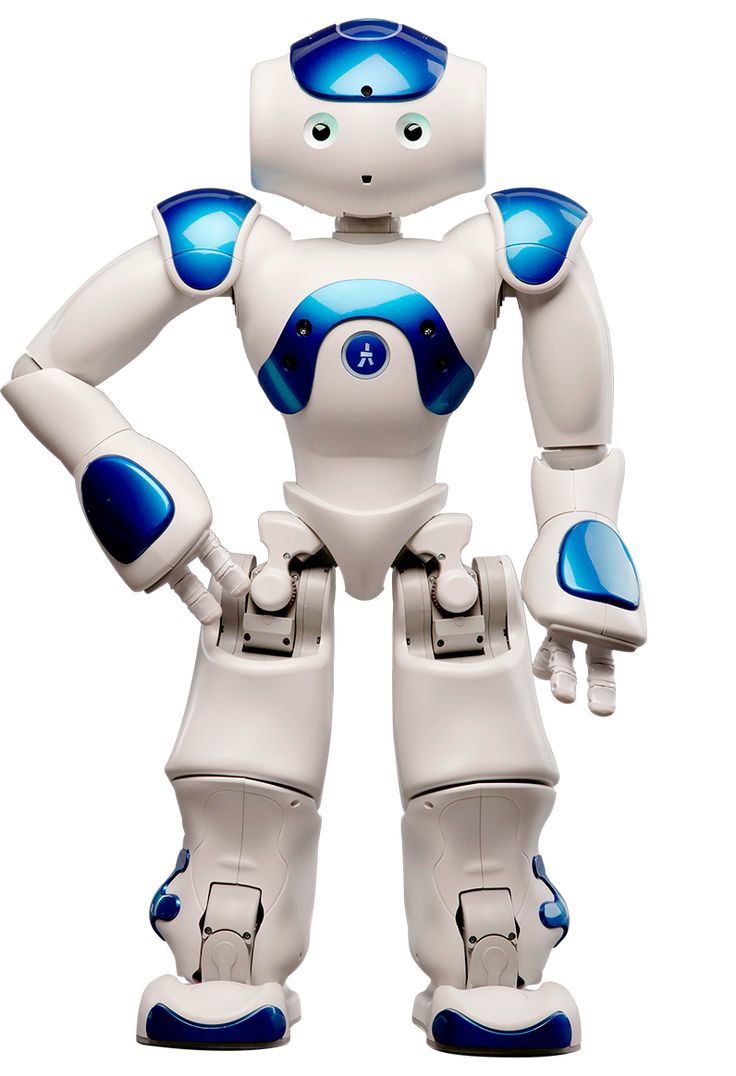
Apptronik said its Apollo humanoid is the culmination of nearly a decade of development. | Source: Apptronik
PART 1. THE NEW SPACE BUDGET
Austin, Texas-based Apptronik has just pulled off a trick worthy of Elon Musk: they expanded their Series A round to $935 million. That's almost a billion. Having started with $415 million in the main round, they faced such pressure from investors that they simply could not close the door. We had to open an additional tranche for $520 million. The final assessment of the company has increased three times compared to the initial one.
Who brought the suitcases with the money this time?
- Old friends: B Capital, Google, Mercedes-Benz (they were already in business).
- New faces: AT&T Ventures (Future Connectivity), John Deere (robots in the fields) and, attention, Qatar Investment Authority (QIA). It's not just money. This is a geopolitical bet that the future of hard work belongs to American humanoids.
Jeff Cardenas, co—founder and CEO of Apptronik, comments with absolute confidence in his voice: "This is a voice of trust in our mission to create robots that work alongside people not as tools, but as reliable colleagues."
PART 2. WHAT IS APOLLO AND WHY DOES EVERYONE NEED IT?
Apollo is not just another two—legged robot. This is the fruit of almost ten years of development in the Laboratory of Human-centered Robotics at the University of Texas. His great—grandfather is the famous NASA Valkyrie. In other words, Apollo knows from birth how to work in extreme conditions.
Apptronik currently has almost 300 employees. Their goal is not just to make a beautiful demo, but to really introduce Apollo into the industry. And they already have combat partners.:
- Mercedes-Benz — for work in production.
- GXO Logistics — warehouse logistics.
- Jabil — electronics manufacturing.
Apollo takes on the dirtiest, hardest, and most boring jobs: carrying components, sorting, and picking. Something that takes people hours and their health.
PART 3. GOOGLE BRAINS AND THE NEW VERSION
The most intriguing detail is the strategic partnership with Google DeepMind. Apollo will be powered by Gemini Robotics— the fundamental models that Google adapts to the physical world. This is the same combination that we wrote about in the case of Boston Dynamics and Google: hardware meets software at a new level.
In 2026, Apptronik promises to introduce the latest version of Apollo and build state-of-the-art centers for data collection and robot training. That's exactly what the money will go for: not prototypes, but scaling up production and accelerating market launch.
PART 4. CONTEXT: THE HUMANOID ARMS RACE
Apptronik is not a lone player. The humanoid robot sector is experiencing a real investment boom, which has not been seen since the days of the first smartphones. Let's take a look at the battlefield:
- Agility Robotics has raised $400 million and has already deployed Digit from Mercado Libre and GXO Logistics (this is considered the first commercial deployment in history).
- Figure AI raised $1 billion in Round C and has also been working with paying customers since December 2024.
- Boston Dynamics is preparing Atlas for commercial launch: all units in 2026 have already been booked for Hyundai and Google DeepMind. Hyundai plans to produce up to 30,000 humanoids per year by 2028.
- LimX Dynamics from China ($200 million) is also in the game.
At the same time, the volume of commercial implementations is still modest. The market is at a point where gigantic investments are met with a slow but steady movement towards a real payback.
PART 5. WHAT'S NEXT? THE ERA OF DISPATCHERS FOR ROBOTS
When thousands of Apollo, Digit, and Atlas vehicles appear in factories and warehouses in a couple of years, a logical problem will arise: who will manage them? How can I synchronize robots from different manufacturers with different operating systems? Fleet orchestrators such as KinetIQ from Humanoid, which we wrote about recently, will take the stage here. They will become "operating systems" for entire armies of machines.
The logic of such platforms, which distribute tasks between autonomous performers, echoes concepts that are explored in projects like JOBTOROB.com. Only now we are not talking about labor exchanges for people, but about control rooms for digital workers. And if Apptronik provides factories with "bodies", then the next big market will be the "brains" that control them.
In the meantime, we have a fact: another billion dollars believed that humanoid robots will leave laboratories for factories tomorrow. Or at least the day after tomorrow.


