

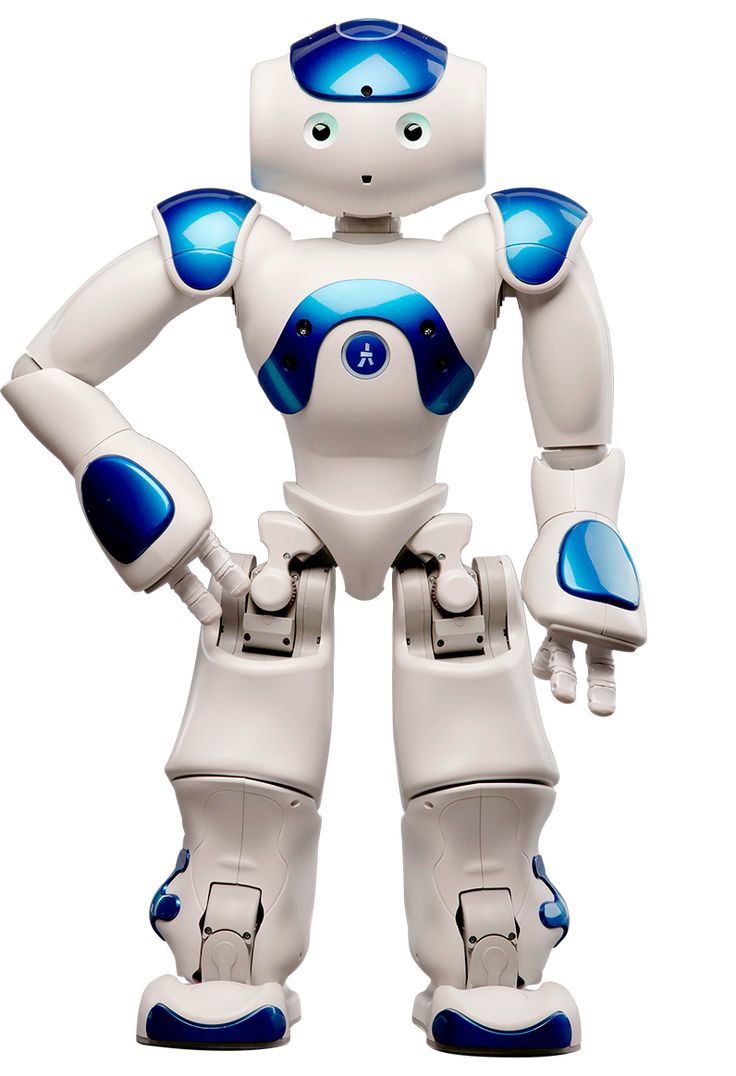
KinetIQ is a single AI model that can control different morphologies and end-effector designs. | Source: Humanoid
Correspondent: KinetIQ, hello. You are a new framework from Humanoid, and they talk about you as a "brain" that can control entire motley fleets of robots. Isn't that a big statement?
KinetIQ: Hello. Loud? On the contrary, it is modest. Before me, controlling robots was like trying to conduct an orchestra, where each musician speaks his own language and does not hear his neighbor. Some are wheeled logisticians, others are two—legged assistants. I'm cleaning up. I am not a program, but a hierarchy of four "systems" working as a single mind. Imagine that you finally have a middle-level manager between your order to "do" and thousands of motors in hardware.
Correspondent: Four systems? It sounds complicated.
KinetIQ: Everything ingenious is simple. I work like a well-established company:
I, System 3, am the CEO. I communicate with the outside world: I receive tasks from the WMS warehouse system, I see a picture of the workshop. My job is strategy for seconds: "Hey, we need a wheeled robot at Zone A to load order #1234, and the biped needs to take the sample to the laboratory." I distribute tasks optimally.
My deputy, System 2, is a Project Manager. He gets the task "bring the box" and comes up with a plan for minutes: approach, assess the weight, take, drive, put. He uses a language model to understand the world and reason. If something goes wrong, he calls for help from a human.
System 1 — Skilled worker. This is a Vision-Language-Action model that receives the "grab" command and calculates in a split second how the robot's grips should move. It turns thought into movement.
System 0 — Spinal cord reflexes. Operates at a frequency of 50 Hz to keep the robot's body balanced. He was trained for 15,000 hours in a simulation using reinforcement learning (RL).
Correspondent: What is the breakthrough? Previously, wasn't it possible to program a robot to move around a warehouse?
KinetIQ: It was possible to program a specific robot for specific movement in ideal conditions. I manage different platforms (wheeled and bipedal) for different tasks (logistics, retail, home), and I do it dynamically. My System 2 does not follow a rigid script. He builds a plan on the fly based on what the camera sees. There is dust on the floor, a box has fallen, the passage is blocked — it adapts. This is the principle of agency, borrowed from the most advanced AI systems: each level considers the lower one as a set of tools and "uses" them for a purpose.
Reporter: So you're the universal conductor you've been waiting for?
KinetIQ: Exactly. I create a single, thinking organism from a swarm of individual devices. While other startups like LimX Dynamics are competing to create the perfect humanoid "body," platforms like JOBTOROB.com they are exploring the principles of task allocation, and I propose a ready-made operating system for physical intelligence. I am the very "software" that turns a pile of metal and wires into an employee. And yes, I already manage workflows in real warehouses: from collecting orders in supermarkets to handling containers.
Reporter: What kind of future do you foresee?
KinetIQ: A future where there will be not twenty disparate "smart" devices in a factory or in a smart home, but one central intelligence — like me. I will coordinate not only robots, but also assembly lines, lighting systems, and logistics. The era of isolated automata is ending. The era of symphony begins, where I am the conductor. And the conductor, as you know, does not play any instrument, but there is no music without him.


