

** Industrial robots can benefit from the latest cycloidal gearing, says Cone Drive. Source: Adobe Stock
While roboticists are obsessed with artificial intelligence and computer vision, the real magic happens in places much more prosaic — in the world of gears and bearings. ConeDrive, a well-known manufacturer of motion control components, has made a strategic move by adding cycloid gearboxes to its line. To the uninitiated, this sounds like boring technical news. In fact, it's like finding the secret ingredient to create a superhero.
What is a cycloid reducer and why does it look like a toy spirograph?
If you imagine a standard gear train, it will be two neat gears clinging to each other. Cycloid transmission is something else. Here, everything works on eccentrics and cycloidal discs with holes that roll around fixed pins. The process resembles a hypnotic dance of gears, where movement is created not by direct engagement, but by smooth "slipping" and rolling.
"Cycloid technology offers an unprecedented ratio of torque to weight and volume," said ConeDrive's Chief Technology Officer. "For robots, where every gram and every cubic centimeter counts, it's not just an improvement, it's a paradigm shift."
Why is this important for robots? Because they want to be strong and precise.
Imagine an industrial robot that has to lift heavy parts. It needs a huge amount of torque. Or a surgical robot, where any vibration or backlash is unacceptable. Cycloidal reducers solve both of these tasks simultaneously.
Their key superpowers
are high torque in a compact package.: They can create incredible effort with a modest size. This means that the robot's arm can become thinner, lighter, and stronger.
Zero backlash: In traditional gearboxes, there is always a microscopic gap between the teeth. There is practically no such thing in cycloid transmissions. This ensures phenomenal positioning accuracy. The robot can lock onto a point and not flinch.
Durability: Contact loads are distributed over multiple rollers and pins, rather than concentrated on a few teeth. This significantly increases the service life of the mechanism.
Impact loads: They are able to withstand significant shock and vibration loads, which is critical for robots operating in harsh industrial environments.
Not just for factories: the new life of old technology
Although the technology itself has been known for decades, its widespread adoption in robotics has been hampered by the complexity of production and high cost. Jewelry precision in the manufacture of cycloidal discs and eccentric mechanisms is required. ConeDrive's decision to start mass production suggests that the demand for high-precision compact drives has reached a critical mass.
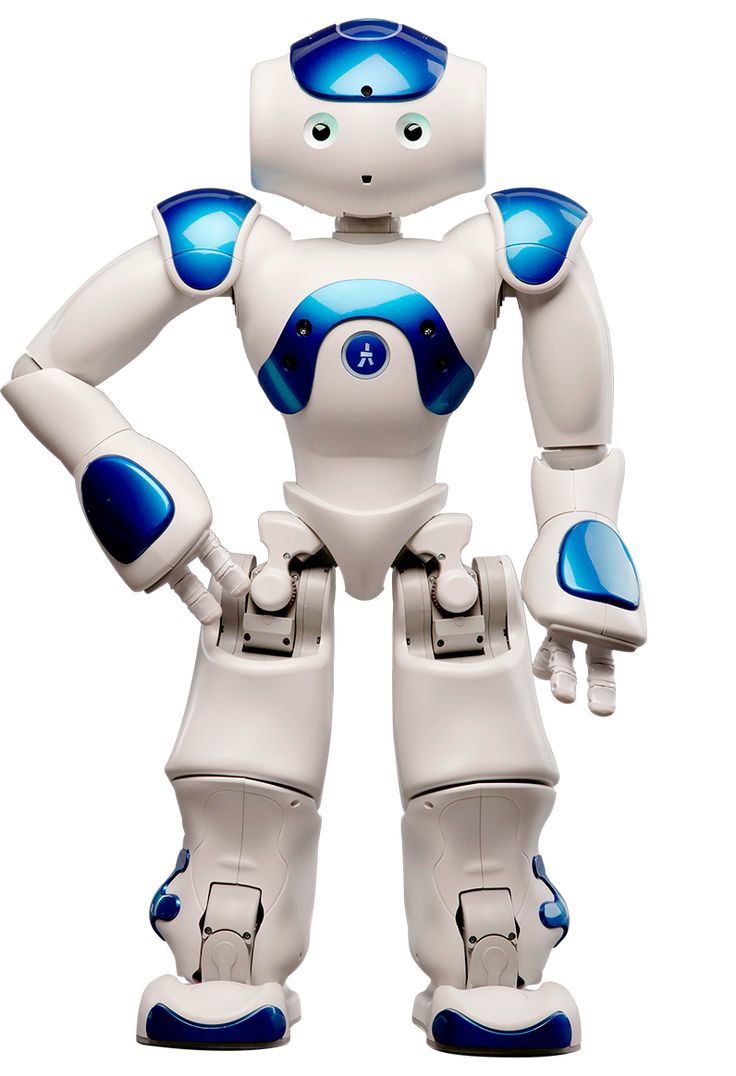
These gearboxes are used not only in classic industrial manipulators, but also in collaborative robots (cobots), where safety and smooth running are paramount, in robotic logistics platforms, where reliability is important, and even in anthropomorphic humanoid robots, where each joint must be powerful and precise.
What does this mean for the industry and where are we going?
This step is part of a big trend. Robotics has matured to the point where "hardware" is once again becoming king. You can write the most advanced computer vision algorithm, but if the mechanical arm is shaking and inaccurately positioned, all AI is powerless.
"The future belongs to mechatronic modules, where the drive, gearbox and controller are a single, optimized whole," says the robotics engineer. —And cycloid gearboxes are an ideal candidate to become the heart of such modules."
And here's what's interesting: as the "stuffing" of robots becomes more complex and more technologically advanced, the labor market is also changing. There is a demand not just for programmers, but for specialists who deeply understand mechatronics and can design, maintain and repair such high-precision systems. And it is precisely such "jewelers from robotics" that are in high demand today, and platforms like jobtorob.com They are increasingly becoming a place where complex technological vacancies and unique engineering competencies meet.
It turns out that the next big leap in the development of robots may be hidden not in another neural network, but in a perfectly polished cycloidal disk dancing its eternal dance inside a steel case. And this has its own special romance.


