



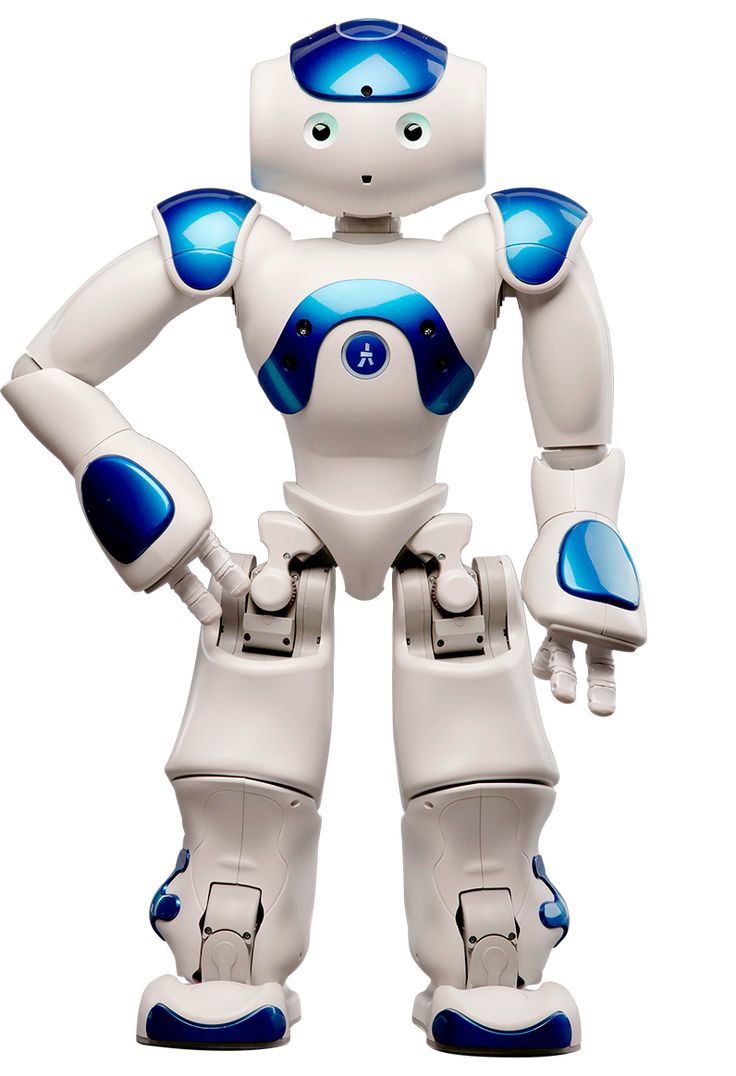

*1X’s NEO humanoid can be purchased for $20,000. | Credit: 1X
Norwegian-American startup 1X has made a bold move by opening a pre-order for its Neo humanoid robot for home. The issue price is $20,000 or $500 per month by subscription. The robot promises to take on boring household chores, from loading the dishwasher to folding laundry. However, behind the shiny shell lies a less avant-garde reality.: Today, Neo is unable to complete any complex task from start to finish without human help. This fact has split the technology community into two camps: some see this as an honest path to true artificial intelligence, while others see it as an expensive toy that only "sells the dream."
Why can't a humanoid robot handle your laundry?
Home is the worst place on Earth for a rookie robot. While factory floors are structured and predictable, the home environment is a chaotic, ever-changing maze. No one has ever seen a robot that empties pockets, removes stains, sorts, washes, dries, folds, and puts away laundry on its own, without scripts or pre-configuration. The demonstrations we see are just polished snippets, far from the reliability required for everyday use.
The main problem is that modern artificial intelligence systems face the "curse of diversity." Each house is unique: everyone has different sets of dishes, different kitchen layouts, and different models of household appliances. The robot needs not only to learn how to perform a task, but also to adapt to an infinite number of variations in an uncontrolled environment.
Teleoperation as a strategy, not a crutch
Instead of waiting for years for a breakthrough in the field of full autonomy, 1X chose a pragmatic, albeit controversial, path. The company openly declares its strategy of "human-in-the-loop" and "Expert Mode".
How does it work?
Autonomous basis: Neo has basic autonomy for simple tasks such as opening doors or navigating around the house.
Remote Expert: When the robot is faced with a difficult or new job (for example, shopping), it can be connected to a remote operator. Employee 1X, using a VR helmet, takes control, completing the task and simultaneously creating training data for the artificial intelligence of the robot.
Practical training: The collected data is used to train a proprietary 1X AI model called Redwood, which runs directly on the Nvidia Jetson Thor on-board chipset.
This is not a hidden flaw, but part of a "social contract" with early adopters. By buying Neo, you are consciously becoming a participant in a large-scale data collection experiment that, as 1X hopes, will one day lead to a truly autonomous assistant.
The iron that won't kill your cat
To make this approach possible, it was necessary to rethink the very design of the robot. Unlike many industrial counterparts with powerful engines capable of causing serious damage, the Neo is based on the principle of "passive safety".
Strain gauges: Instead of rigid gearboxes, soft, malleable cable drives inspired by human muscles are used. This minimizes kinetic energy and makes movement safer for people and furniture.
Soft housing: The internal components are enclosed in a soft 3D-lattice polymer structure that dampens impacts.
Quiet operation: The noise level is about 22 dB, which is quieter than that of a modern refrigerator.
Such a design is not just a feature, but a necessary condition. Only a robot that cannot destroy your house at the first mistake can be allowed to learn through trial and error in real conditions.
Philosophical War: 1X vs Figure
The approach of 1X stands in stark contrast to the strategy of its main competitor, Figure.
Comparative table of approaches 1X and Figure
Parameter | 1X with the Neo robot | Figure with a robot Figure 03 |
| The main strategy | Gradual autonomy through teleoperation and data collection | Solving the problem of general intelligence before commercial launch |
| The human role | The key link for training ("Expert mode") is excluded from the workflow; | Criticism of the TV operation as "undignified" |
| Criticism of the opponent | From the Figure's side: “interesting... I didn't know that it was possible to skip the autonomy completely... and call it the company's vision” | From the side of 1X: autonomy is impossible without an array of data collected in real homes |
| Financing | Both companies have raised significant funds and are aiming to collect data worth ~$1 billion. | |
Brett Adcock, CEO of Figure, openly ridicules the teleoperation strategy. In response, 1X and its supporters argue that the most valuable data for training a home robot can only be obtained if the robot itself is physically located in homes, and the teleoperation is the engine that collects this data.
What awaits us tomorrow? From remoteness to self-study
Technology columnist Marques Brownlee called the launch of Neo "a hype video about what they hope to create someday," pointing to the gap between today's opportunities and the promised future. The Fireship YouTube channel agrees with him, sarcastically describing the Neo as a device backed by a man in a VR helmet who performs the role of "technical support" for $20,000.
However, the 1X strategy also has influential defenders. Experts such as Mario Bollini from Boston Dynamics believe that teleoperation is the only reasonable way to teach autonomy for many household tasks. Put robots in real conditions, collect data, and progress will not be long in coming.
If the 1X strategy pays off (which is likely to happen), we may be on the threshold of a new era when fleets of various autonomous assistants will become commonplace. And here there may be a need for advanced management tools for this "digital staff". Platforms like the world's first ecosystem for hiring robots jobtorob.com They could become an operating system for such a future, allowing owners not only to manage their own Neo, but also, if necessary, to "hire" additional robotic specialists to perform specific tasks, creating a flexible and efficient network of automated workforce.
Conclusion
1X makes a huge bet that true intelligence is born from experience, not just algorithms. They are not selling a ready-made robot servant, but a front-row seat to the most ambitious experiment in the field of household robotics. The buyer pays $20,000 not to solve their cleaning problems today, but for the opportunity to become a sponsor and partner in creating the future that everyone hopes will one day come. And while Neo will slowly and diligently learn how to load dishes, a man in a VR helmet will be standing behind him - his teacher, his brain, and the subject of the most heated debates in the technology community.


