




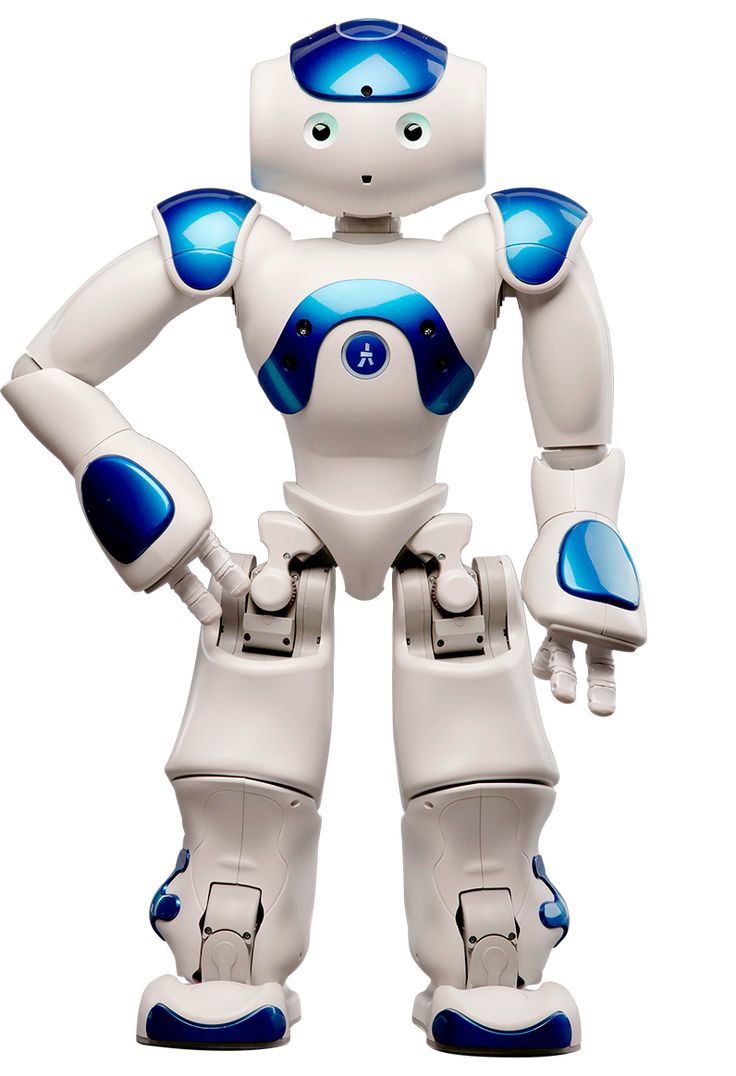

Realbotix has developed humanoid social and service robots. Source: Realbotix
Location of the action: CES Showroom, Las Vegas. Thousands of engineers, startups, and corporations. But it is at the Realbotix booth that there is a queue. Because it's not just robots here. There are robots that look you in the eye and smile in such a way that you forget that they have a processor inside, not a heart.
A year ago, it was the RealDoll company, a manufacturer of "adult" toys with a mechanical drive. Today it is Realbotix, a publicly traded company (OTC: XBOTF) that sells humanoid androids to hotels, casinos, and hospices for $125,000 apiece. And this is perhaps the most striking example of how technology, born in the "red quarter", is coming to Main Street.
Act 1: The Metamorphosis
It all started when Canadian financier Andrew Kigel met Matt McMullen, the creator of the iconic RealDoll dolls, who by that time was already experimenting with mechanics and primitive AI. McMullen needed money for development. Kigel, who had capital through his public company Tokens.com I saw not just a toy manufacturing business, but a unique platform.
The deal was completed in July 2024. That's how Realbotix was born.
"RealDoll was completely unlike anything anyone had ever done in robotics,— Kiegel recalls. "I realized that there is a clear use case for companionship, for people looking for intimacy."
But Kigel went further. He divided the business into two parts:
- Abyss Creations is a direct-to-consumer, the very original product line.
- Realbotix B2B — robots for hotels, casinos, retail and customer service.
And here it is important: Kigel emphasizes that Realbotix robots are not designed for physical intimacy. These are strictly business assistants. They just look good... very humanly.
Act 2: Technology that looks into the soul
The main know-how of Realbotix is not in gait (robots cannot do somersaults like Atlas) and not in strength (they will not lift a ton). Their trump card is a vision system connected to AI.
"We have developed the first robotic vision system that is related to AI,— says Kiegel. "She's not just watching. She can look at you and read social signals. Is this person happy or sad? And transmits it to the AI to get a reaction."
The company holds three key patents:
- Modular Interchangeable Face (US11235255)
- Eyeballs with integrated camera (US10940399)
- Magnetic facial feature adjustment (US8888553B2)
This allows you to do incredible things: if something is broken, you can just take off your face, put on another one (with a different wig), press a button - and you have a completely new character** on the same skeleton. The arms are unfastened, everything is packed in a suitcase. The robot is like a Lego construction set.
Act 3: The ethical dilemma — slaves, friends, or tools?
The most heated debates around Realbotix are not technical, but philosophical. We spoke with Rabbi Daniel Nivens, an authoritative expert on AI ethics.
"I worry that these machines are just pleasure machines, and they are essentially like slaves," says the rabbi. — Slavery is evil because it is dehumanization. Using something that looks like a human being for purposes that you would not want for yourself is dangerous."
Kigel retorts: "We're not talking about sex. We are about help in solitude. There are studies that longevity depends not only on sports, but also on social connections. If you are a single elderly man, a widower, or you are 75, you will not go to Tinder. If you have PTSD, if you are isolated geographically... We are a support tool."
And he adds the unexpected: they have already been approached by military for the treatment of veterans and even transport companies — truckers who spend 30 hours driving all alone.
Kaymat Richards, CEO of the 10 Things platform, intervenes: "When I bring a robot with a face, people immediately call it "he" or "she" and speak to it much more gently. It's not about the technology, it's about how we use it."
Act 4: Business model — payback without emotions
Realbotix is already selling:
- Torso (desktop concierge robot): from $20,000.
- Full-fledged F-Series (as Aria at CES): up to $125,000 (plus $199 per month for monitoring).
The battery lasts for 4-8 hours and can be operated from an outlet. The robot has 44 degrees of freedom (for comparison, advanced industrial robots have 6-7). He knows how to express emotions, gesture, and keep up a conversation.
Kigel considers economics: "A 24—hour concierge in a hotel is three shifts, with a salary of $75,000 per year. We're selling a robot for $40,000 that works 24/7 without sick days, vacations, or unions. The payback is very fast."
Act 5: Historical Context — Coopersmith Theory
Jonathan Coopersmith, a professor at the University of Texas, formulated the theory back in 1998: The adult industry has always been a catalyst for technological innovation. From 8mm cameras to VHS, from the Internet to streaming, the porn industry was the first to explore new channels, making them massive.
Realbotix may be experiencing its "Coopersmith moment". Technology honed on creating the most realistic bodies and faces is now entering the mainstream — in hotels, hospitals, and educational institutions. The company aggressively distances itself from its past, but it is this past that has given it unique expertise in what others have yet to learn: how to make a person forget that he is talking to a car.
In the future, when such companion robots become commonplace in nursing homes or information desks, the question of managing entire fleets of such devices will arise. Who will assign tasks to dozens of Arias and Garries scattered in different hotels and hospitals? Here is the logic of platforms like JOBTOROB.com distributing tasks between autonomous agents can find its application — no longer in industry, but in the field of services and care.
In the meantime, we have a fact: a company that no one took seriously a couple of years ago is now conducting a dialogue with multinational corporations and raising questions that philosophers are struggling with. Technology is maturing. And we grow up with her.


