

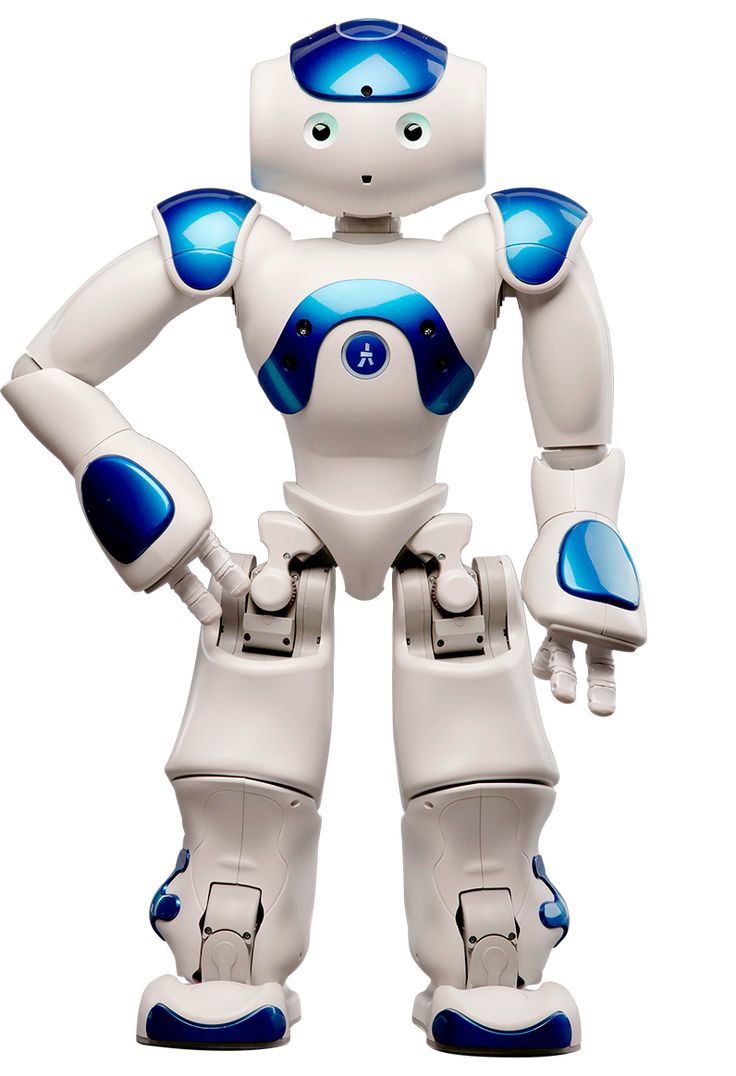
Imagine: a humanoid robot proudly marches through a construction site, but suddenly stumbles over a brick and flies into a puddle of concrete. Is it a familiar picture? For most robots, yes. But not for those who are being "educated" by FieldAI, a startup that has just raised $405 million from Jeff Bezos, Bill Gates and NVIDIA to teach machines to think before acting. Their secret? Physics is the very thing that makes you and me look at our feet when we walk through the ice.
What's wrong with regular robots? They're like first-year students after a night at the bar.
Traditional robots blindly follow instructions. No GPS? They were lost. An unfamiliar environment? They fall into a stupor. Industrial robots have been working in factories for years just because they have perfectly smooth floors and predictable conditions. But in the real world—on construction sites, in mines, or in destroyed buildings—the rules change every second. It requires not just a "performer", but a "thinking employee".
FieldAI has solved this problem radically: their Field Foundation Models (FFM) are AI models that teach the laws of physics from birth. For example:
Gravity exists, and if a robot is pulling a 50—kilogram load, it is better for it to calculate the center of gravity, otherwise a fall is inevitable.
Friction is not an abstraction — you need to move differently on a wet floor than on a dry one.
Uncertainty is normal — if the sensors are illuminated by the sun or dusty, the robot does not panic, but uses alternative data.
Why did investors throw $405 million into this idea? Because it works!
The list of investors sounds like a challenge to Elon Musk: Bezos, Gates, NVIDIA, Intel, Samsung 310. But it's not about ambition — FieldAI is already making money on real projects.:
- In Japan, their robots inspect nuclear power plants.
- In Europe, they monitor the construction of high—rise buildings.
- In the USA, they work in Amazon warehouses (and yes, they are not yet staging a machine uprising).
Their models are hardware-independent — the same "brain" can be installed on a four-legged robot, humanoid or wheeled platform. It's like Android for robots: downloaded it, and you're working.
How does it work? Very humanly
FFM simulates how people learn from mistakes:
Multimodal input — The robot reads data from lidars, cameras, and tactile sensors simultaneously.
Risk assessment — before each action, the system calculates: "Am I going to fall? Will I break the load? Will I hurt a person?"
Learning on the go — if the robot does make a mistake, it remembers it and does not repeat it again.
Unlike language models like ChatGPT, which can "hallucinate" and offer absurd solutions, FFM is tailored to physical reality. Her "hallucinations" end at the stage of: "Lift the box? Okay, but first I'll check if it's welded to the floor."
Where will it come in handy? Yes, wherever it's scary or boring.
- Construction — robot foremen who do not sleep and do not require coffee.
- Power engineering — inspection of pipelines under radiation conditions.
- Logistics — autonomous loaders that do not transport goods in random directions.
- Rescue operations are robots that are not afraid of rubble and fire.
And yes, maybe soon they will be assembling your IKEA furniture — and without unnecessary details at the end.
Pitfalls: What if the robot gets too smart?
So far, the main problem is not the riot of machines, but energy consumption. Such complex calculations require powerful processors, and robots cannot yet work for hours without recharging. In addition, in a completely unknown environment (for example, on Mars), the model may still be wrong — but it has not yet been sent there.
Conclusion: Robots are finally growing out of diapers
FieldAI isn't just creating another robot— it's changing the paradigm. Instead of programming every action, we give machines physical intuition. In 10 years, robots will not fall from the wind — they will expose their faces to the sun's rays and philosophically talk about quantum mechanics. Or at least carefully avoid puddles.
In the meantime, their motto is: "Think before you take a step. Especially if there's a concrete mixer ahead"


