

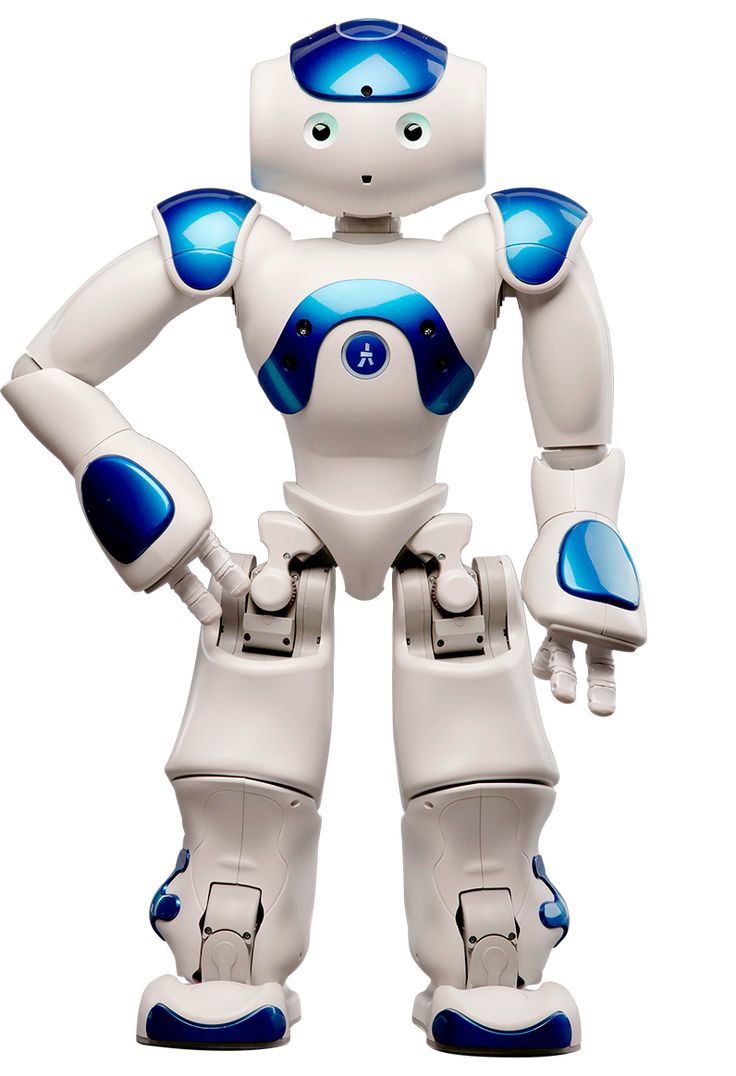
** NVIDIA is accelerating robotics research and development with new open models and simulation libraries. Credit: NVIDIA
While everyone is watching the hysteria around the next Tesla Optimus prototype, which alternately dance and freeze in the pose of a thoughtful philosopher, a much more important event is taking place in the wings of the technological theater. NVIDIA, which has become to the world of AI what OPEC is to the world of oil, has launched its new aircraft carrier. And this is not just a chip, but an entire ecosystem designed to make today's clumsy iron blocks into future assistants, colleagues, and, who knows, maybe dance partners.
CEO Jensen Huang, whose famous leather jacket seems to have already become part of his DNA, outlined a future at the GTC 2025 conference where robots learn not by endless falls in the real world, but in a giant, incredibly complex digital sandbox. "In the future, humanoid robots will be able to learn in a simulator, mastering general skills that can then be easily adapted to work in the real world," Huang said. In fact, NVIDIA is building not just an engine, but a "Matrix" for robots — a place where they can fill themselves with all the bumps without breaking a single real object.
Project GR00T: Not just a cute troll, but the foundation of general intelligence
At the center of this ambitious plan is Project GR00T (Generalist Robot 00 Technology). If previous AI models for robots were narrow specialists — one for capture, the other for navigation — then the GR00T is an attempt to create a universal polyglot from robotics. His goal is to understand natural language and imitate human movements in order to eventually learn how to interact with the world the way we do.
Imagine telling a robot, "Get a cup of coffee from the kitchen." The GR00T-based robot must not only recognize the command, but also understand what a "cup" is, where the "kitchen" is, how to carefully walk around the dog on the floor, open the door without hitting the jamb, and not spill the contents. This is a huge leap from memorized scripts to situational understanding.
Isaac Lab: A Digital Babysitter for Future Terminators
But how to train such a "universal soldier"? This is why Isaac Lab is presented, a cloud—based platform for mass training of humanoid robots. This is the next step in evolution after Isaac SIM. If the latter was a powerful simulator, then Isaac Lab is already a whole training complex, tailored to the specifics of bipedal machines. It allows you to run thousands of parallel simulations, where virtual clones of the same robot simultaneously learn to walk on different surfaces, pick up objects of different shapes and not fall if they are slightly pushed.
"Learning in simulation is the only scalable way to create truly useful robots. The real world is too slow, expensive, and fragile for trial and error," notes one of the project's technical architects. It's like teaching a pilot not on a real Boeing, risking his life and the plane, but on an ultra-realistic exercise plane, where you can crash a hundred times and learn from it.
OSMO Platform: When Data Becomes the Blood of Robotics
This whole giant artificial intelligence factory requires incredible amounts of data. And here NVIDIA presents its "nervous system", the OSMO platform. Its task is to organize and manage the flow of data between ecosystem components: from sensors of real robots to simulators and back. OSMO is a bridge between the digital and physical worlds, which ensures that the knowledge gained in the simulation is effectively transferred to hardware, and the experience of real robots enriches their digital counterparts.
Jetson Thor for Humanoid Robots: An all-in-one Brain
In order for all this magic to work right inside the robot, and not in a remote data center, you need the appropriate computing power. That's why the company is introducing Jetson Thor, a new computer for humanoid robots. Built on the NVIDIA Blackwell architecture, it has sufficient performance to run complex AI models like the GR00T in real time. In fact, this is an attempt to pack the power of a modest supercomputer into a box that a robot can carry on its shoulders.
What does this mean for all of us?
NVIDIA is not just releasing another product. It creates an industrial standard, an infrastructure for the entire emerging humanoid robot industry. Instead of dozens of startups and corporations building their own "Matrices" from scratch, they can come and rent power from NVIDIA. This speeds up development for years.
This opens up a gold mine of opportunities for engineers and researchers. There will be an explosive demand for specialists who know how to work with these platforms: set up simulations, train models, and adapt them to specific tasks. And it is precisely such highly qualified personnel, capable of speaking the languages of AI, robotics and simulation, that will be worth their weight in gold in modern talent search platforms such as jobtorob.com .
One philosophical question remains: when thousands of digital copies of our future robot butler will simultaneously fall in a simulation, learning not to step on a rake, will this be considered collective suffering? But let futurologists think about it. Meanwhile, the engineers will be busy.


