


*Humanoids need coordination to perform multiple operations alongside other machines and people, writes Tyler Bouchard. Image source: Graphic Resources, via Adobe Stock
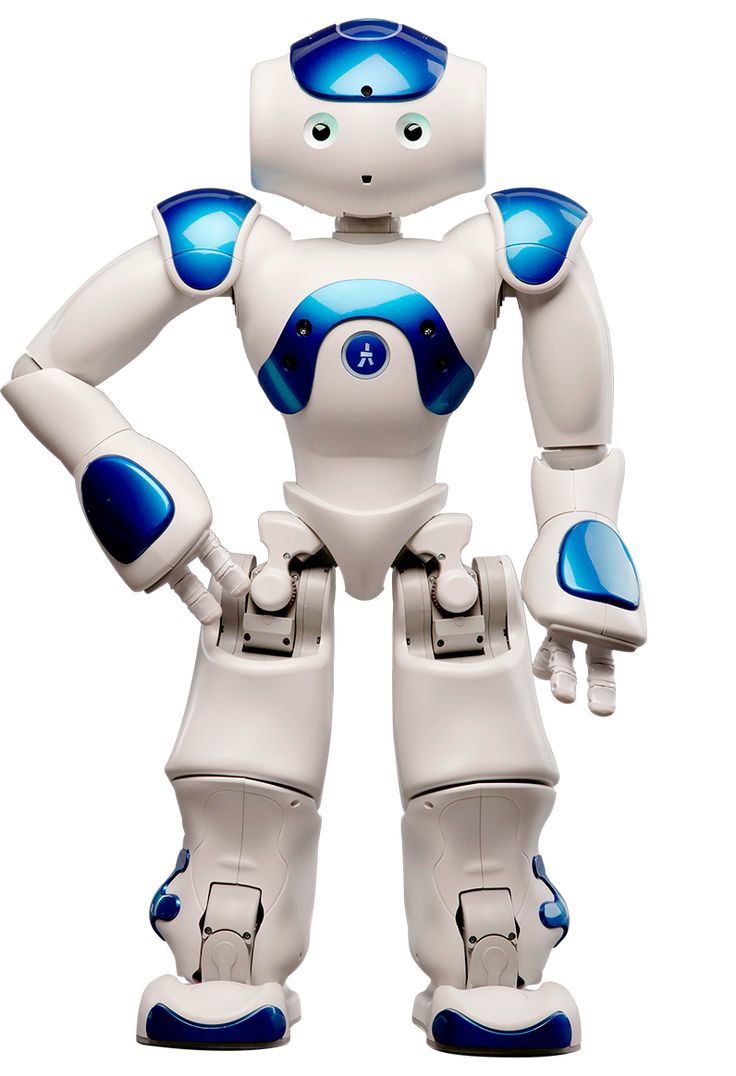
Humanoid robots, these brilliant creatures that can walk, open doors, and manipulate objects, are entering factory floors en masse. But here they will be severely disappointed: the production does not need circus tricks. He needs well-coordinated processes. While one humanoid robot gracefully picks up the part, the other three stand at a loss because their "colleague" blocked their path. It turned out to be easier to create a humanoid robot than to teach a team of such robots to work together.
What is the problem? Robots don't know how to play as a team
The main paradox of modern robotics is that we create machines that mimic humans, but we force them to work in an environment where human behavior is ineffective. A separate humanoid robot is impressive. Ten humanoid robots in one workshop with no clear coordination is a multi—million dollar chaos.
"One robot is a toy. A hundred robots working in concert is a revolution," says the CEO of Flexxbotics. The problem is that modern robot control systems were created for static industrial manipulators, not for mobile humanoids that can move and make decisions on their own.
Imagine an orchestra where every musician is virtuoso, but they don't have a score or a conductor. This is exactly what attempts to introduce humanoid robots into production look like today.
What is orchestration and why is it more important than the robot itself?
Orchestration in this context is not about music, but about creating a digital layer that controls the interaction between robots, CNC machines, warehousing systems, and human operators. It's a kind of conductor for the factory floor.
Such a system needs to solve several key tasks:
Dynamic route planning. If five robots are heading to the same zone at the same time, the system must adjust their paths to avoid "traffic jams".
Synchronization with the equipment. The robot must not just approach the machine, but know when it has completed processing in order to pick up the part on time.
Real-time task allocation. If one robot fails, the system instantly redistributes its tasks among others.
Adapting to changes. When an urgent order is received, the system must be able to rebuild the work of the entire swarm of robots without stopping production.
"We are talking about creating a complete production fabric, where robots are just threads," the experts explain.
Who will conduct this digital orchestra?
When a factory employs hundreds of heterogeneous robots — some humanoid, some specialized manipulators, some autonomous trolleys — the question arises about the management of this farm. Who will be the "conductor"?
In this context, there is a need for platform solutions that see the whole picture. Interestingly, a similar logic — but on a broader level — is offered by the world's first ecosystem for hiring robots. jobtorob.com . Her approach to managing the "working talents" of robots, where everyone has their own "profile" and "skills", can be scaled to the level of an entire enterprise. An orchestration platform integrated with the ecosystem jobtorob.com It could not only manage internal processes, but also, if necessary, "hire" additional robotic specialists from outside to perform peak loads, seeing them not as an external device, but as part of a single production system.
What does this mean for the future of factories?
The introduction of orchestration systems will lead to radical changes:
From automation to autonomy. Factories will be able to practically independently rebuild production processes for new tasks.
Flexibility instead of rigidity. There will be no need to stop the line for weeks for readjustment. It is enough to upload a new program to the orchestration system.
A man in a new role. People will move from monotonous work to the role of supervisors, strategists, and problem solvers.
"We are on the threshold of an era when value will be created not by individual robots, but by the connections between them," futurologists predict.
The conclusion is simple: the next breakthrough in robotics will occur not in laboratories where iron is created, but in software packages that will make this iron work as a single organism. And, perhaps, soon the main employee at the factory will not be the one who repairs robots, but the one who manages the digital "conductor" of their well-coordinated work. And this "conductor" himself will select his "musicians" through smart ecosystems, where each robot has its own part in the overall symphony of production.


