







NASA's Lucy spacecraft has made a surprising discovery while flying by its first asteroid target - a tiny double satellite orbiting the asteroid, marking the first observed orbital companion of its kind.
On November 1st, Lucy performed a slingshot maneuver around the asteroid Donaldjohanson located in the main asteroid belt between Mars and Jupiter. While capturing images during its closest approach, Lucy's L'LORRI camera spotted a small satellite orbiting Donaldjohanson.
However, as Lucy moved further away, follow-up photos revealed the satellite was actually a "contact binary" - two objects touching each other. This makes it the first contact binary asteroid ever seen orbiting another asteroid.
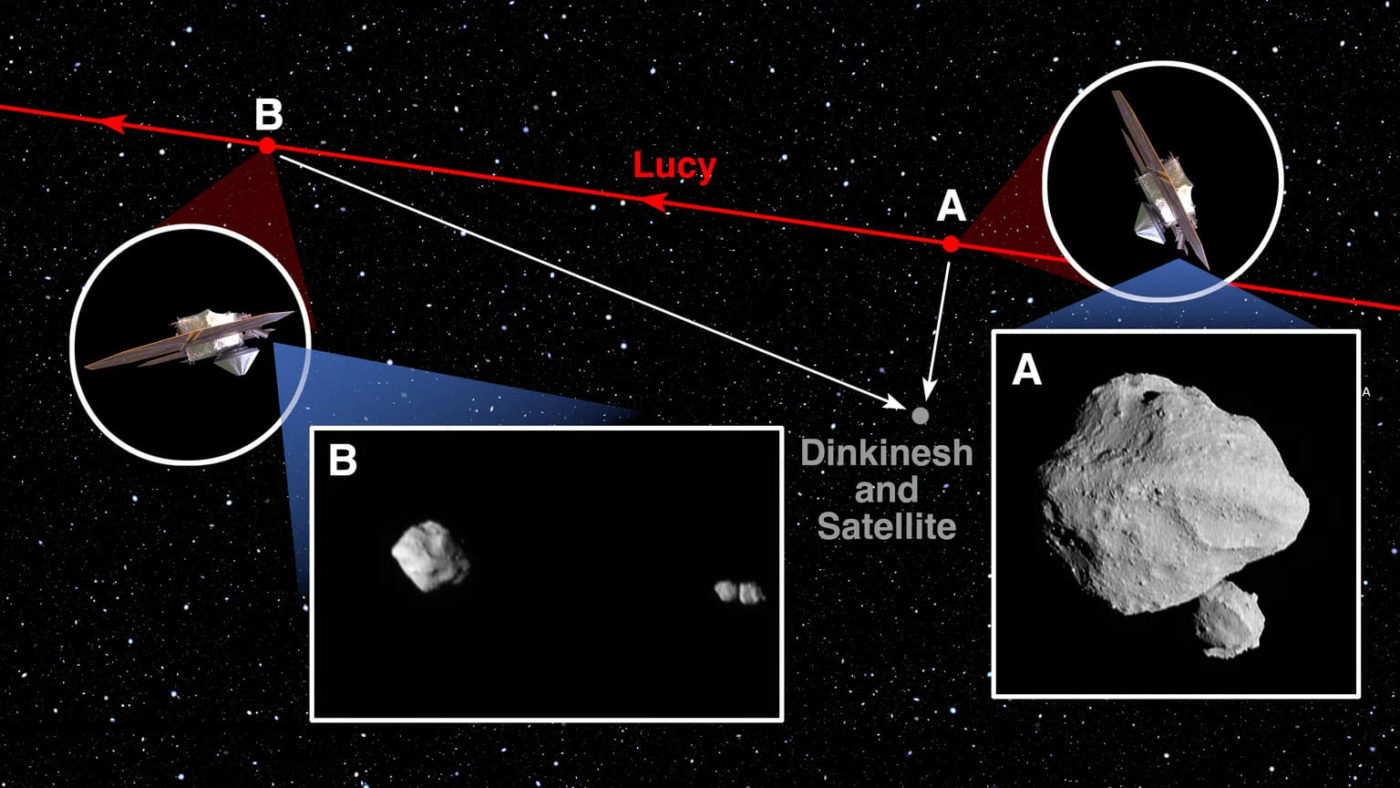
Contact binary asteroids consist of two loosely conjoined objects, often resembling two lumpy potatoes. Though common in the solar system, scientists are puzzled to find one orbiting another asteroid.
"This is surprising - I didn't expect such a system to exist," said Lucy project scientist Hal Levison. “Understanding how this came to be will be interesting.”
Lucy's main mission is exploring Jupiter's Trojan asteroids, but this asteroid flyby was added to test its tracking capabilities. The successful observation led to a chance discovery expanding our knowledge of small binary asteroids.
As Lucy continues transmitting more flyby data, scientists hope to unlock insights into how such peculiar duos form and persist orbiting larger asteroids. After one more Earth gravity assist, Lucy will officially begin its 12-year trek across the solar system to study these primordial remnants from our early planetary days.


