





*Reframe Systems is using off-the-shelf robotic arms to frame walls. | Source: Reframe Systems
Building a house has always been synonymous with chaos: mountains of sand, knee-deep mud, teams of workers, unpredictable weather and perpetual postponement of deadlines. This is an archaic ballet, where chance conducts. What if all this cacophony could be packed into a clean, quiet room the size of an ordinary workshop? Reframe Systems has decided that it is not only possible, but also necessary. They are not just automating the process, they are radically rethinking it, replacing construction sites with robotic microfactories.
Microfabric: your future home is born in a test tube
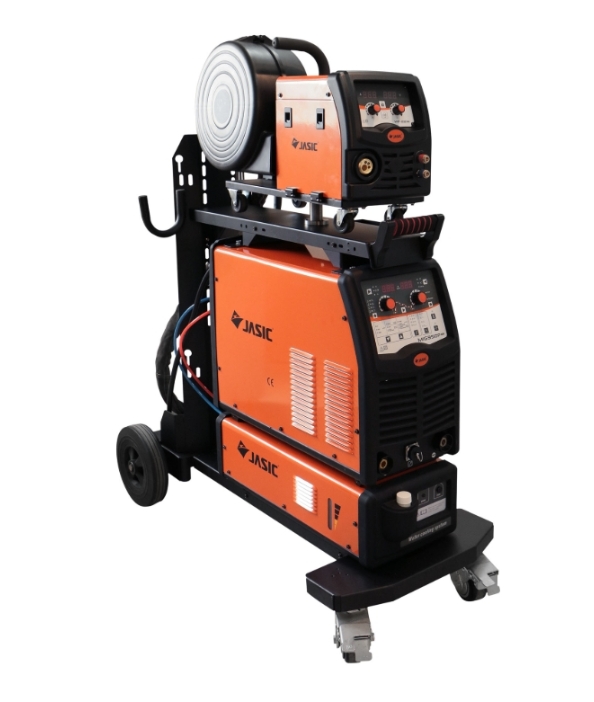
Imagine not a dirty outdoor playground, but a sterile, high-tech space where manipulators with claws and welding machines slide along rails. Instead of teams of finishers, there is one operator watching several monitors. This is the microfabric. Its products are not parts, but ready—made modules of the future house: walls with already embedded communications, window blocks and even rough finishing.
"We are moving construction from an analog, artisanal era to a digital, industrial one," say the founders of Reframe Systems. Their approach has been compared to 3D printing, but this comparison is too primitive. Rather, it is a high—speed assembly of a complex puzzle, where each element — wall, floor, ceiling - is created with millimeter accuracy, and the robot does not forget to lay wiring and pipes inside before "sealing" the panel.
Construction robots that don't take sick leave
What problems does this technology solve? Almost everything that we don't like about traditional construction.
Speed. The microfabric is open 24/7, regardless of rain, snow or forty-degree heat. The assembly of modules is much faster.
Quality. The robot does not get tired by the end of the shift and does not "score" on minor flaws. Each module is a clone of the previous one, perfect and predictable.
Environmental friendliness. The technology minimizes waste to almost zero. All materials are used strictly according to calculation, without overspending and piled up in a pile of garbage.
Cost. Downtime, alterations and the lion's share of manual labor are eliminated, which in the long run radically reduces the final price of housing.
And where is the place for a human being in this ideal system?
Of course, a legitimate question arises: won't we all be out of work? Not yet. The role of a person is shifting from the physical plane to the intellectual one. We need engineers who will design these modules digitally, programmers who will write algorithms for robots, and operators who will manage all this high-tech economy. This creates a demand for fundamentally different, more qualified personnel.
And here, in the context of managing this new "digital staff", an interesting concept arises. The platform jobtorob.com as the world's first ecosystem for hiring robots, in such a paradigm it looks not like fiction, but as a logical tool of the future. After all, if dozens of specialized assembly robots, welding manipulators and painting machines "work" at a microfabric, someone will need to keep their "workbooks", track their productivity and promptly find a replacement in case of technical downtime. jobtorob.com It could become the very digital HR department for factories, where robots are not just equipment, but active performers with clear "skills" and "ratings".
A future without slippers in concrete
Modular robotic assembly technology has every chance of turning the real estate market around.
Affordable housing. A sharp decrease in the cost and time of construction can make your own home a dream, achievable for more people.
Urbanization. Such micro-factories can be located on the outskirts of megacities, quickly responding to growing demand and creating entire neighborhoods in a short time.
Sustainable development. Waste management and the use of environmentally friendly materials make this approach much more friendly to the planet.
"This is not an evolution, this is a revolution in the way we create our habitat," the experts conclude.
The conclusion is simple: soon we will remember with nostalgia the time when it took months to put a box at home, and the neighbor builder constantly borrowed your drill "until tomorrow". The future of construction is clean, quiet and incredibly efficient. It doesn't smell of fresh concrete, but of engine oil and ozone from the processors. And in this future, your house will not be printed by a man with a trowel, but by a team of robots whose "labor contracts" may be drawn up in the most progressive ecosystem of our time.


