

January 2026 did not bring flying cars or a machine uprising. Instead, he brought something more impressive—the quiet, methodical, and ubiquitous occupation of our reality by robots. While we were making plans for January, the robotics industry staged a real landing: from construction sites and factories to our doorsteps and even our own bodies. This is not the future. It's already now. Let's see who changes the rules of the game and how.
🎯 Industrial Soldiers: Movers, excavators and kings of logistics
- The victory of brute force (and algorithms): Amazon started the year with a decisive move — absorbed Rightbot. What for? To get a robot that can randomly load and unload trucks. Why is this a triumph? Because it's a hellish, unsightly job in any weather. If Amazon automates this "last mile" in its warehouses, its logistics empire will become completely invulnerable. Competitors can just exhale.
- Is a smart excavator boring? What about the fully autonomous Bobcat Rogue X3 electric loader? It's not just a toy. This is the third generation of the machine, which decides for itself how to dig, load and move around the construction site. Goodbye to hard work and exhaust fumes. Hello, a quiet, efficient and unmanned construction site. Are you bored? Only if you are not the owner of a construction company.
💉 Cyber Medics: When your dentist is a robot (and that's cool)
Forget about robot surgeons for routine surgeries. Neocis has announced that its Yomi robotic system for dental and maxillofacial surgery has performed over 100,000 operations. One hundred thousand! And its second-generation system, Yomi S, has already performed its first clinical operations. This is not a prototype. This is a massive, proven tool that right now helps surgeons make the most difficult incisions with jewelry precision. The robot in the operating room is no longer a curiosity. It has become as common a tool as a scalpel, only smarter.
🚁 A courier with a propeller: How drones became part of the routine
The expansion of Wing and Walmart sounds dry: "drone delivery to 150 new stores." But translate this into human language: more than 40 million Americans will have access to the magic of "ordered — arrived in 15 minutes". By 2027, the network will grow to 270 points. This is no longer a pilot project in a backwater. This is the formation of a new infrastructure, as familiar as a courier by car. Soon, the complaint "I've been waiting for a package for a week" will sound like an archaism.
🤖 The Rise of humanoid machines: the main hit of the month
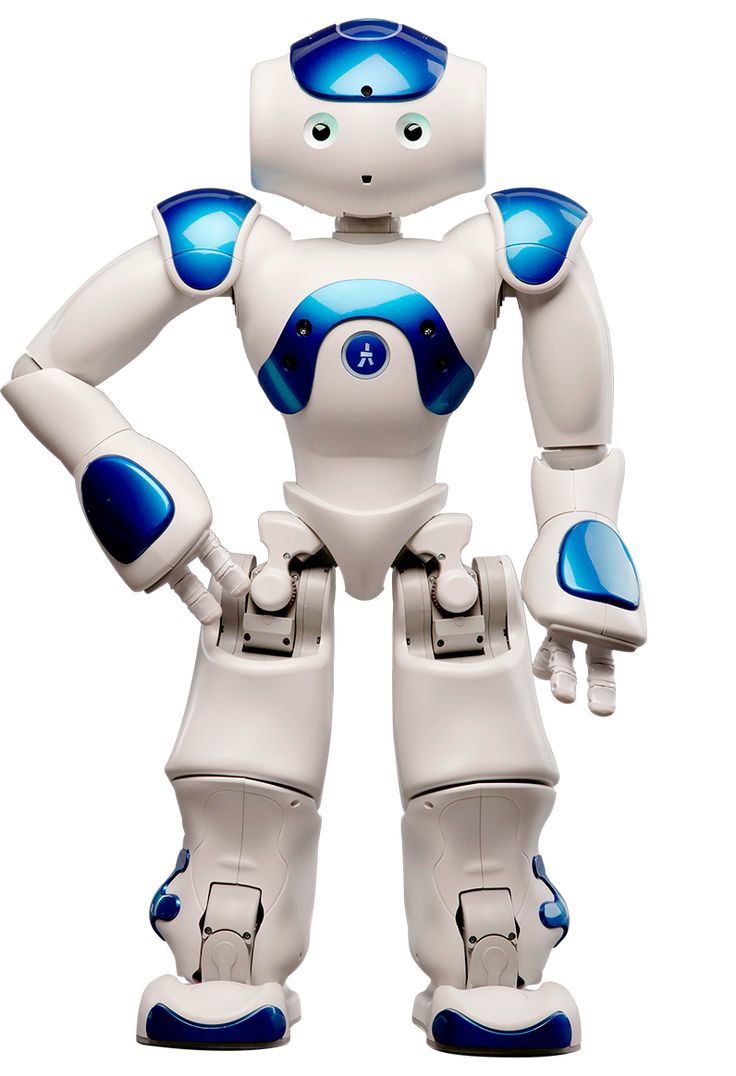
And now — the juiciest. A month has passed under the sign of Boston Dynamics Atlas. And not just under a sign, but to the accompaniment of deafening statements.
- They're back together! The Godard Drama: Boston Dynamics and Google (represented by DeepMind) have reunited. After a painful "separation" at SoftBank, they got back together to inject real intelligence into Atlas. DeepMind will use its fundamental Gemini Robotics models to teach Atlas not just to move, but to understand the world and act in it. It's like giving an Olympic gymnastics champion a doctorate in physics.
- Not just dancing, but working.*Atlas didn't just pose for 60 Minutes. He was shownat a real Hyundai factory in Georgia**, where he performed tasks. This is a powerful signal: investments in humanoids in 2025 reached**$4.6 billion**, and these investments are beginning to pay off on the assembly line. Forget about the "narrow AI". The future belongs toLarge Behavior Models (LBMs) — "large behavioral models" that will allow robots to learn tasks in the physical world, just as ChatGPT learns from text.
- The gun race of intelligence. Microsoft did not stay away, introducing the Rho-alpha (pa) model — its own Vision-Language-Action (VLA) model so that robots can "see, reason and act". An era is beginning when software for robots will be more important and more expensive than their hardware.
What does this mean? The industry has reached a tipping point. The conversation has shifted from "what are robots could do "on "what they already do reliably in the real world." The humanoids leave the labs and enter factory halls built for humans. They become ideal employees for the "brown zones" of the existing infrastructure.
And here the philosophical question arises: who will manage this new army of "digital workers"? Who will distribute tasks between an autonomous loader on a construction site, a humanoid on an assembly line and a drone over the city? Complex dispatch platforms may be needed in the future to coordinate such diverse automated systems. Perhaps it is projects such as JOBTOROB.com, which today explore the principles of task allocation between robots, will tomorrow become operating systems for the entire physical world.
📈 Bottom line: don't wait for the apocalypse — wait for efficiency
January 2026 showed that robotics is maturing. This is no longer about HYPE and demo videos on YouTube. It's about implementation, scaling, and payback. Robots don't come to impress us, but to do jobs that are boring, dirty, dangerous, or incredibly accurate. They're already here. They are already working. And there are only more of them.


